
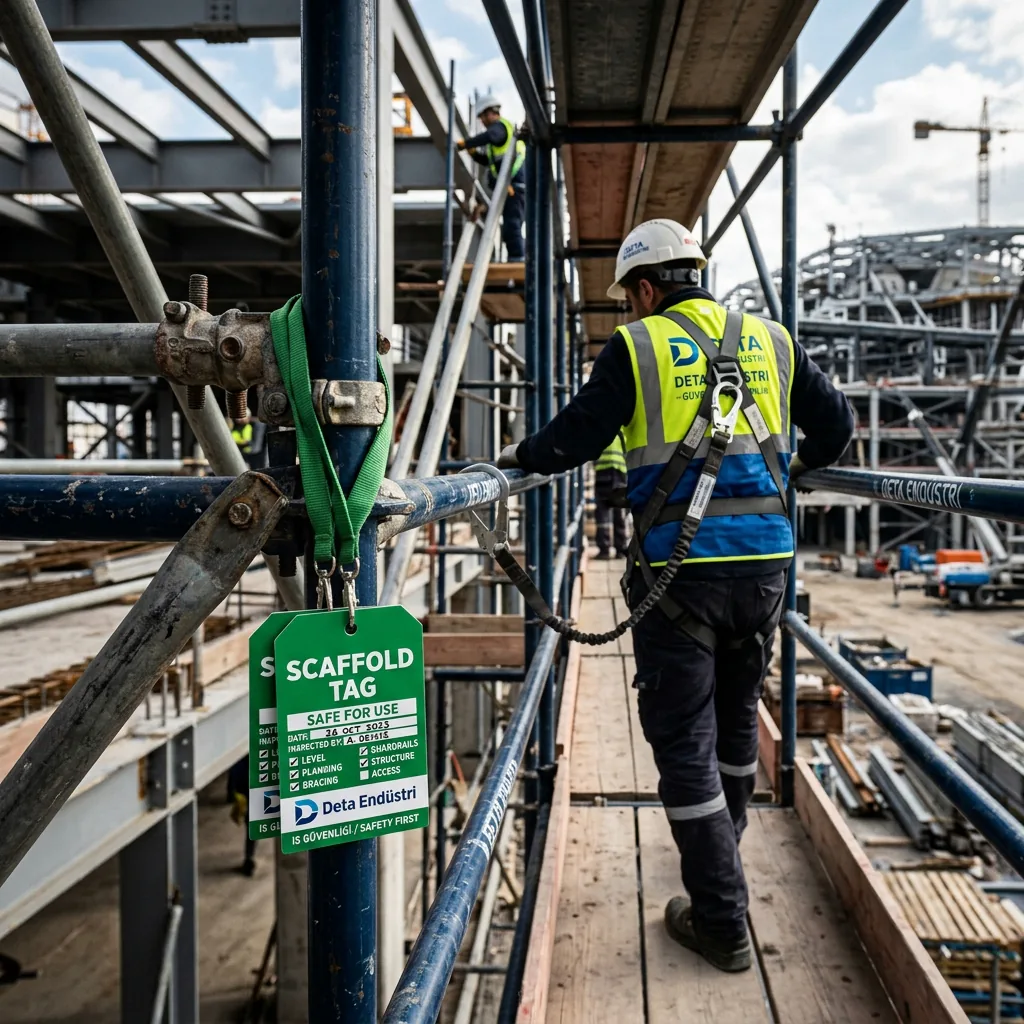
Scaffolding Occupational Health and Safety (HSE): Guide to Zero Accidents in Works at Height
Introduction
At the top of the activities involving the highest risk in construction and industrial projects is working on scaffolding. Statistics show that a significant part of accidents caused by working at height originate from scaffolding. Therefore, scaffolding occupational health and safety (HSE) is not just a procedure but a vital necessity.
In EPC (Engineering, Procurement, Construction) projects, scaffolding is indispensable for maintenance, assembly, insulation, and painting works. However, scaffolding systems that are not correctly planned can cause serious industrial accidents and project losses.
Deta Endüstri: For project-specific solutions and detailed information, you can review our Industrial Scaffolding Rental and Installation Services page.
What is Scaffolding HSE?
It is a set of rules and systems applied to ensure the safety of employees in all processes from scaffolding installation to dismantling. Its purpose is to prevent falls from height, reduce scaffolding collapse risk, and prevent material falling.Basic Risks and Prevention Strategies in Scaffolding
Working at height is naturally risky, but these risks can be completely managed with a professional HSE approach.
Falling from Height
The biggest risk factor. Absolute protection is provided with full-body safety harnesses, life lines, and fully closed platforms.Scaffolding Collapse
Caused by weak connections and insufficient anchorage. Static calculations and compliance with EN 12811 standards eliminate this risk.Material Falling
It is a danger for employees at lower levels. Prevented with toe boards and security nets.Tagging
Green Tag: Safe. Red Tag: Under installation/Dangerous. Creates a disciplined inspection language in the field.Indispensables for Scaffolding Safety
System safety is ensured not only with equipment but by the inspection of certified experts.
- Daily Site Controls: Checking of connection points and anchorages at the start of the shift.
- Toolbox Meeting: Short, focused safety information meetings held before each work.
- Permit to Work (PTW): Obtaining approval from the authorized HSE unit for scaffolding installation and working on it.
Certified Personnel and Training
Scaffolding installation must be performed only by certified expert teams. All employees must receive regular training on scaffolding HSE rules and emergency evacuation procedures.Fall Prevention Equipment (PPE)
A safety harness is not only for wearing but for connecting to the correct anchorage point. Life lines and shock absorbing lanyards are the last line of defense saving lives in case of a fall from a height.
MISTAKE: Lack of Inspection
Most accidents in the field occur in uninspected moments when it is said "nothing will happen this once". No scaffolding that does not pass periodic inspections should ever be climbed.Conclusion: HSE is a Life-Saving System
Scaffolding occupational health and safety is not a cost but the most valuable investment protecting human life. Correctly planned and inspected systems are the basic key to reaching the "Zero Accident" goal in the field. You can achieve high safety standards by performing your static analyses in a digital environment with DetaPlan.
Deta Scaffolding Team
This content has been prepared and verified by Deta Industrial technical experts.