
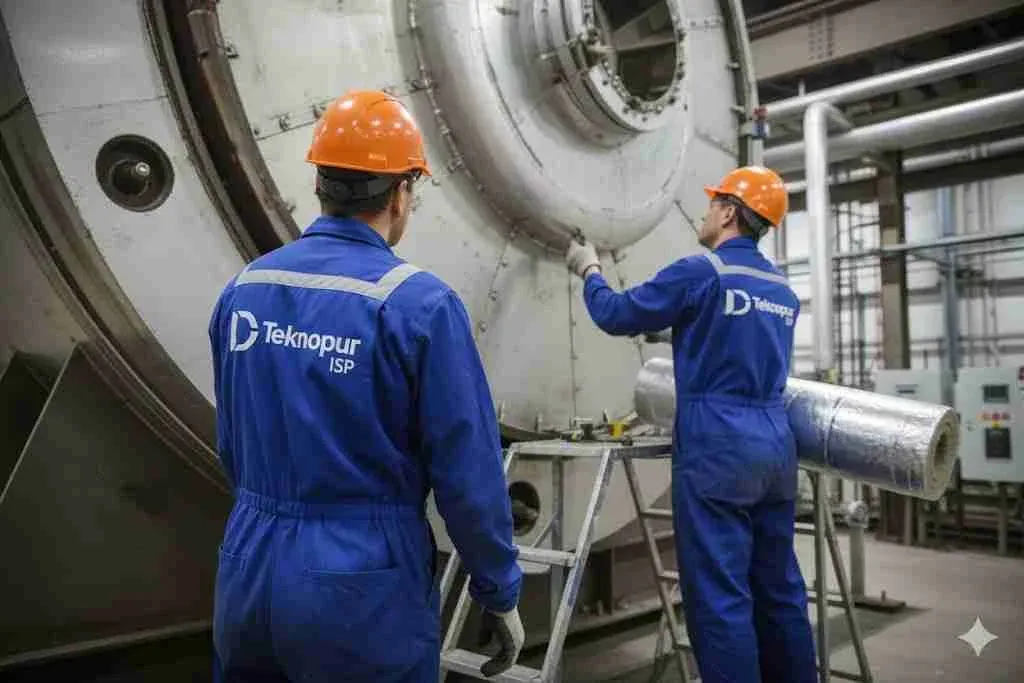
Fire Insulation
Structural strength, life safety and operational continuity with Passive Fire Protection (PFP).
Structural Strength and Safety with Passive Fire Protection (PFP)
Fire insulation for industrial facilities, power plants, petrochemical complexes and commercial buildings is not just an insulation application; It is a critical risk management strategy in terms of life safety, structural integrity and operational continuity. Even if active extinguishing systems are activated in case of fire, the structure must maintain its strength for a certain period of time. This is where Passive Fire Protection (PFP) systems come into play.
What is Passive Fire Protection?
They are protection solutions designed to limit the effects of fire and do not require activation.
- Delaying the spread of fire
- Protecting carrier elements
- Securing critical equipment
- extend the evacuation period
Effects of Fire
Uncontrolled temperature increase; It may cause a decrease in steel strength, deformation of the carrier system and the risk of chain explosion.
Advantages of Fire Insulation
1. Structural Strength
The fire resistance period of steel columns, beams and platforms is increased.
2. Life Safety
Critical time is gained for evacuation and intervention.
3. Process Safety
Tanks, pipes and equipment are protected.
4. Legal Compliance
Compliance with regulations and international standards is ensured.
5. Damage Minimization
Post-fire repair costs decrease.
PFP Systems Used
Fire Resistant Coatings
Cement/Plaster based sprays and Epoxy intumescent paints.
Rockwool Based Systems
Fireproof (A1), high temperature resistant solutions.
Calcium Silicate Sheets
High mechanical strength and fire compartmentation solutions.
Ceramic Wool Systems
Extreme temperature applications (turbine, furnace environment, etc.).
Fire Resistance Periods
The targeted periods in PFP design refer to the duration of the structural element to maintain its function.
Standards
Frequently Asked Questions
Regulatory Compliance
- EN 13501 Classification
- UL and FM Approved Systems
- Türkiye Fire Regulations
Manage Your Fire Risk
Let us identify your facility's fire safety deficiencies and fix them with certified solutions.