
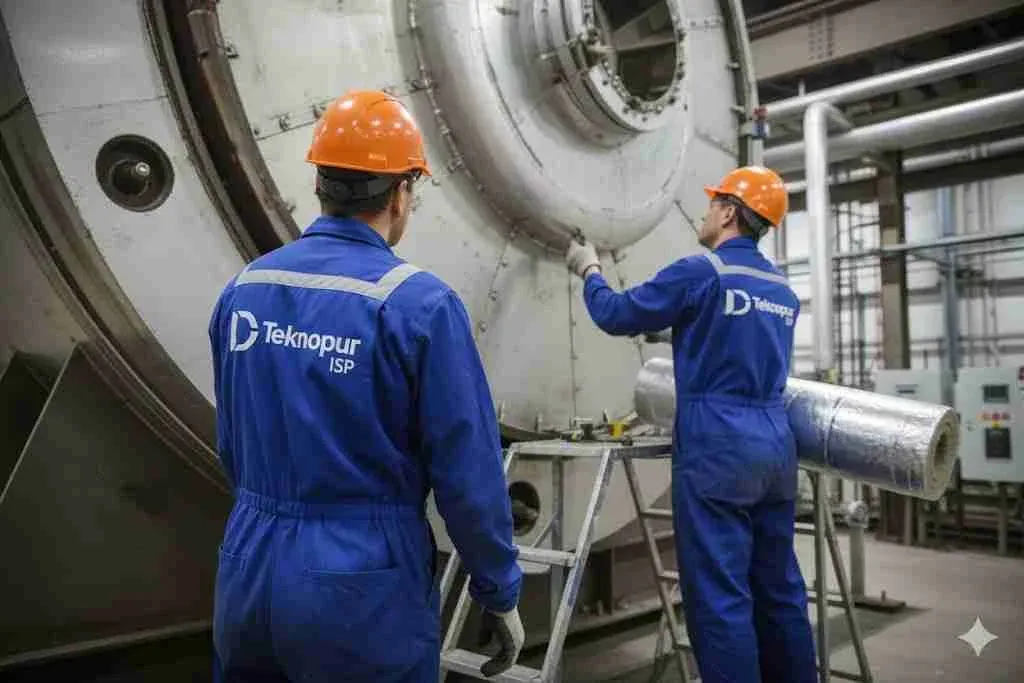
Cryogenic Insulation
Safe solutions that minimize heat gain and boil-off rate in extreme conditions of -160°C and below.
Heat Gain, Boil-Off and Security Management in Extreme Cold
Cryogenic insulation is one of the areas of industrial insulation that requires the highest engineering precision. During the transportation and storage of LNG, LPG, liquid oxygen (LOX), liquid nitrogen (LIN) and similar low temperature fluids; Heat gain, boil-off, icing, condensation and mechanical stresses pose critical risks. Therefore, insulation in cryogenic systems is not only for energy efficiency; It is also essential for process safety, preventing product loss and maintaining equipment integrity.
What is Cryogenic Insulation?
It is a multi-layered and high-performance insulation system that is generally applied in equipment and lines operating between -50°C and -196°C. Aim:
- Minimizing heat gain
- Reducing the boil-off rate
- Prevent condensation & icing
- Reducing the risk of CUI (corrosion under insulation)
- Maintaining mechanical strength
Heat Gain and Boil-Off
Even the slightest heat input in cryogenic tanks and pipes can cause gasification of the fluid, pressure increase and safety valve activation.
Moisture Ingress and Icing
Air moisture seeping into the insulation and freezing causes volumetric expansion and disintegration of the insulation. The vapor barrier is vital.
Advantages of Cryogenic Insulation
1. Boil-Off Reduction
Heat gain decreases → Gasification is minimized.
2. Process Safety
The risk of pressure fluctuations and thermal shock is reduced.
3. Condensation & Icing Control
The surface temperature is kept stable.
4. Energy Efficiency
The load on cooling systems is reduced.
5. Equipment Life
Thermal stresses and CUI risk are reduced.
Materials Used
PUR/PIR
Low thermal conductivity coefficient (λ), lightweight structure and high performance rigid foams.
Foam Glass
100% closed cell, water/vapor tight, high compressive strength and cryogenically stable.
Airgel Based
Advanced technology providing maximum performance in thin sections with ultra-low λ value.
Perlite / Vacuum
Special systems used in double-walled tanks that minimize heat gain.
Engineering & Design
Vapor Barrier Details
The main goal is to reduce moisture diffusion to zero with multi-layer barriers, aluminum foil, mastic and special membranes.
Critical Parameters
- Service temperature & Fluid type
- Heat gain limit (Heat Gain)
- Thermal expansion/contraction calculations
- mechanical loads
Application Areas
- LNG tanks & lines
- LPG cryogenic systems
- LOX / LIN tanks
- cold gas lines
- petrochemical plants
- Maritime & terminals
Deta Industry Approach
- Heat gain analysis
- Dew point & condensation calculations
- Proper material combination
- Multi-layer barrier design
- Professional field application
Frequently Asked Questions
Critical Success Factors
- 100% Vapor Tightness
- Heat Gain Analysis
- Cold Sealing
Don't Take Risks
There is no margin for error in your cryogenic projects. Contact our expert engineers.