
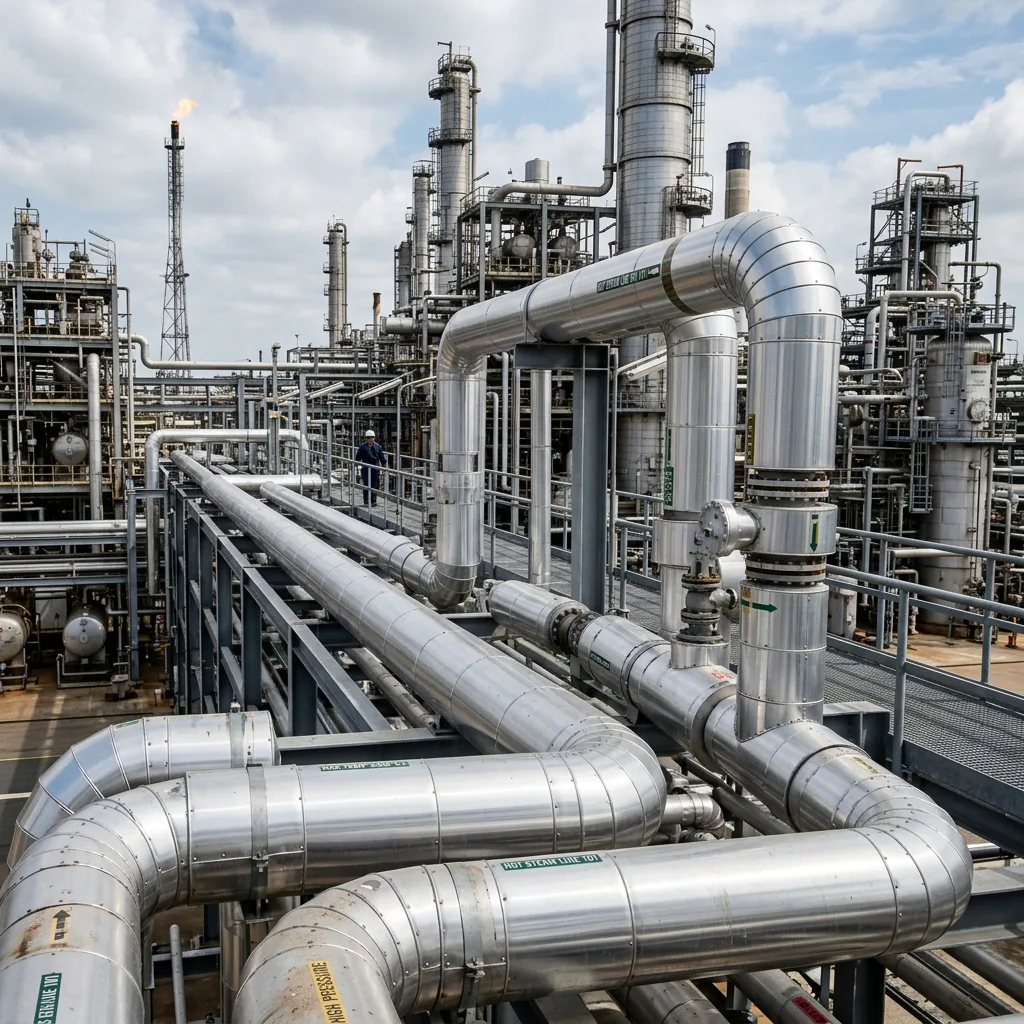
What is Industrial Insulation? Guide to Energy Saving, Application Techniques and Correct System Selection
Introduction
In today's world where energy costs are increasing rapidly, energy efficiency in industrial facilities is no longer a choice but a necessity. One of the most critical solutions at this point is industrial insulation applications. Correctly performed insulation in refinery, petrochemical, power plant, and heavy industrial facilities both minimizes energy loss and increases occupational safety. However, due to errors made in the field, incorrect material selection, and insufficient applications, the performance expected from insulation systems is often not achieved.
What is Industrial Insulation?
It is the process of covering pipelines, equipment, and structures with special materials to control physical effects such as heat, sound, and fire. It directly determines facility performance by reducing energy losses by 20%-60%.Insulation Types and Materials Used
Insulation systems vary according to the technical needs of the facility and operating temperatures.
Heat Insulation (Thermal)
The most common type of insulation that lowers fuel consumption by preventing heat loss in steam lines, boilers, and tanks.Cold Insulation
Low conductivity materials such as polyurethane foam are preferred to prevent condensation in LNG facilities and cooling lines.Sound and Fire
Rock wool and ceramic fiber systems are applied to reduce turbine noise or protect critical equipment during fire.System Basis: Surface
70% of successful insulation depends on surface preparation. Cleaning and anti-corrosive paint application is the most critical step determining the life of the system.Application Techniques and Cladding
After the insulation material is applied, it must be sealed with professional cladding to protect it from external factors.
- Material Selection: Use of rock wool with high heat resistance or ceramic fiber for very high temperatures.
- Cladding: Covering the outer surface of the insulation with aluminum or stainless steel sheets.
- Sealing: Complete isolation of joints and connection points against water and moisture entry.
Energy Saving Calculations
Parameters such as fluid temperature, wind speed, and humidity should be calculated with engineering software for correct insulation, and optimum thickness should be determined.Quality Control and Common Mistakes
One of the biggest problems weakening insulation systems is the CUI (Corrosion Under Insulation) risk.
MISTAKE: Lack of Vapor Barrier
Not using a vapor barrier in cold insulation systems causes icing inside the insulation and rapid corrosion of the metal. These leaks should be scanned regularly with thermal camera analysis.Conclusion: Insulation is an Energy Investment
Industrial insulation is one of the invisible but most critical performance elements of facilities. Instead of a short-term cost approach, it should be evaluated as a strategic investment focused on long-term energy saving and operational safety.
Deta Insulation Team
This content has been prepared and verified by Deta Industrial technical experts.