
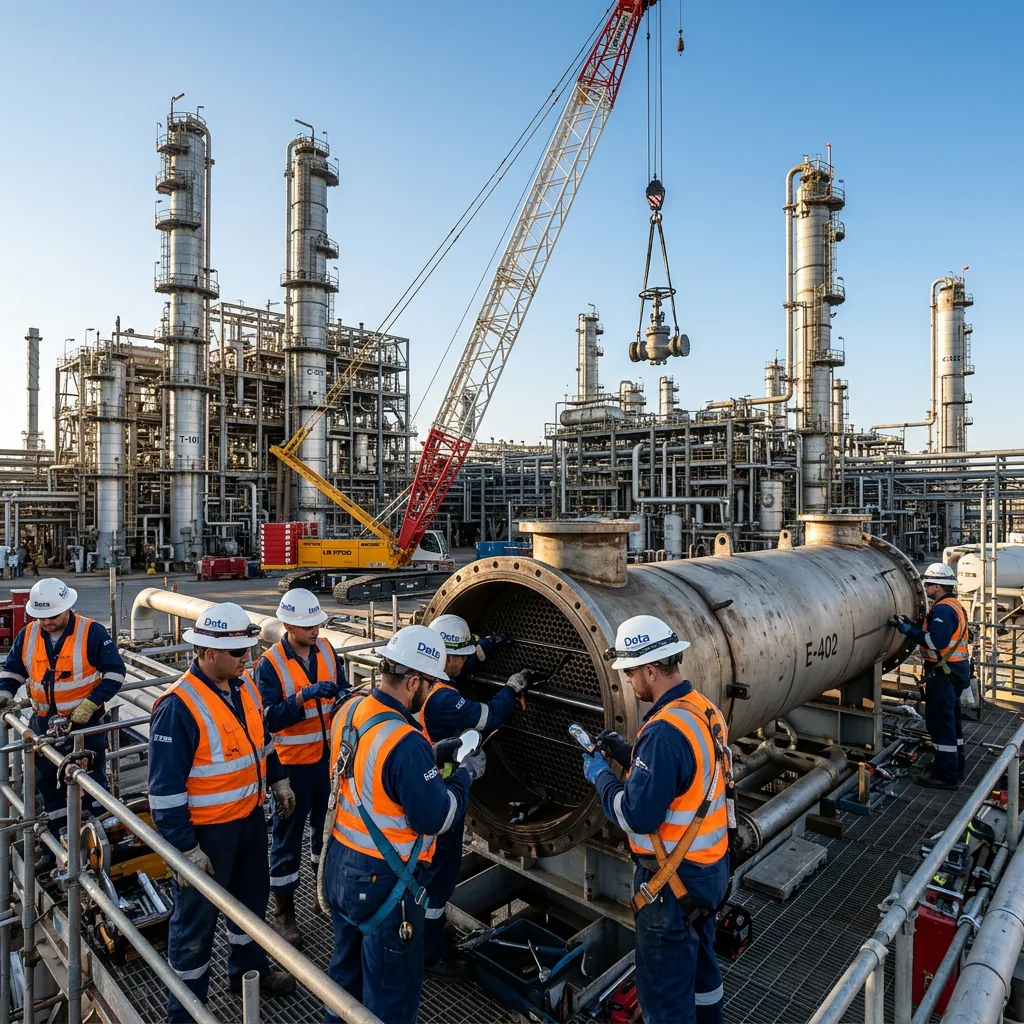
Planned Shutdown Management in Industrial Facilities: Critical Success Guide for EPC Projects
Introduction
In industrial facilities, maintenance activities carried out at the right time and in the right way are as important as production continuity. Especially planned shutdown management in refineries, petrochemicals, and power plants is a critical process for the safety, efficiency, and long-term performance of the facility.
Planned shutdowns are inevitable for equipment maintenance, revision, modernization, and safety improvements. However, a poorly planned shutdown process can lead to serious time losses, cost increases, and operational risks.
What is a Planned Shutdown?
It is the controlled shutdown of a facility for a certain period to perform maintenance, repair, and improvement works. The main purpose is to prevent unplanned failures and optimize facility performance.Shutdown Processes and Planning
The basis of a successful shutdown depends on the detailed preparation before the application in the field.
Pre-Planning
The process of determining the job scope, critical path analysis, and creating detailed equipment lists.Resource Management
Human resource, crane, and equipment planning and completing the material supply chain before the shutdown.Mechanical & Piping
The critical field phase where equipment revisions, line changes, and leak tests are most intensely performed.Painting & Insulation
This period when the facility is at a standstill is the most suitable time for corrosion control (painting) and energy efficiency (insulation) works.Critical Safety System: LOTO (Lockout-Tagout)
Shutdown periods are much more intense and risky than normal operations. In this process, controlling energy sources is of vital importance.
LOTO: Life-Saving Lockout
The LOTO system, which ensures the safe isolation of energy sources, prevents industrial accidents by preventing unexpected energy flows. The "Lock and Tag" principle must be applied without compromise.Factors Determining Success
For professional shutdown management, a balance between time and quality control must be well established.
- Time Management: Daily monitoring of activities on the critical path and immediate intervention in delays.
- Field Coordination: Daily coordination meetings (toolbox meetings) between disciplines (mechanical, scaffolding, insulation, etc.).
- Quality Control: Complete documentation of all controls before NDT tests and commissioning.
The Role of Modern Technologies
Today, in addition to software such as Primavera/MS Project, shutdown processes are managed much more predictably and safely with Digital Twin simulations and IoT sensors.Conclusion: A Strategic Efficiency Investment
Planned shutdowns should be evaluated not as a production loss but as a long-term performance investment. A correctly managed shutdown minimizes the future failure risk of the facility and extends its operational life.
Deta Scaffolding Team
This content has been prepared and verified by Deta Industrial technical experts.