
Offshore Surface Protection and Corrosion Control: NORSOK M-501 Standards | Deta Industry
Offshore Surface Protection and Corrosion Control: NORSOK M-501 and TR3016 Engineering Standards
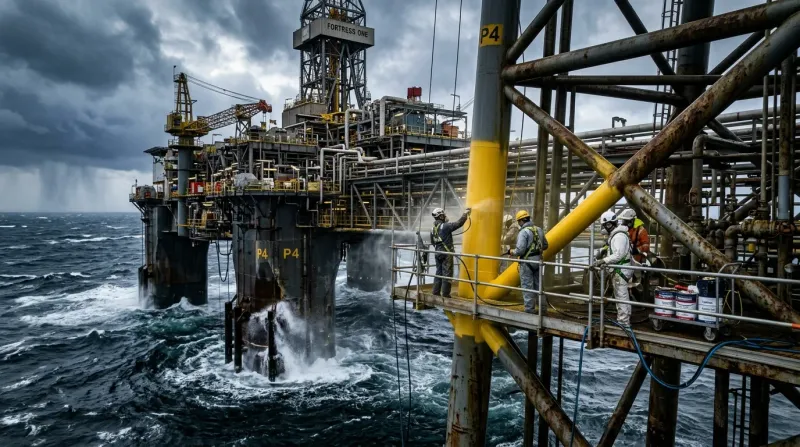
Offshore oil platforms, FPSO vessels, and offshore wind turbines operate in the earth's most aggressive corrosion environment (ISO 12944 CX) due to high salt concentration, continuous humidity, extreme UV radiation, and splash zone mechanical impacts. In these facilities, preventing unplanned shutdowns, protecting structural integrity, and minimizing maintenance costs is possible not through conventional painting methods, but through NORSOK M-501 compliant surface preparation, TR3016 approved composite wrapping, and robotic/rope access technologies.
1. Corrosion Threat in Offshore Facilities and CX Atmospheric Class
In offshore operations, corrosion is not merely an aesthetic or superficial deterioration; it is a critical process safety (HSE) risk that can lead to hydrocarbon leaks, environmental disasters, and billions of dollars in equipment loss. Marine structures are divided into 3 primary corrosion zones:
- Atmospheric Zone: Upper deck structures exposed to wind, salt spray, and intense UV radiation.
- Splash / Tidal Zone: The most vulnerable area continuously wetted by tides and waves, where saturated oxygen and mechanical erosion are most destructive.
- Submerged Zone: Legs and subsea pipelines fully immersed in seawater (supported by cathodic protection).
[TECHNICAL STANDARD] In accordance with ISO 12944-2 (2018 revision), offshore environments are classified as CX (Extreme Corrosion Category). Protective coating systems operating in this environment require dry film thickness (DFT), salt spray resistance (ISO 9227 minimum 4,200 hours), and adhesion strengths that are 2 to 3 times higher than standard onshore industrial facilities.
2. Surface Preparation and Coating Systems per NORSOK M-501
Developed by the Norwegian petroleum industry and recognized globally as the offshore specification in EPC projects, the NORSOK M-501 (Surface preparation and protective coating) standard represents the benchmark for offshore surface engineering:
- System 1 (Carbon Steel Structures - Atmospheric): Surface preparation to ISO 8501-1 Sa 2.5 or Sa 3 (SSPC-SP 10 / SP 5) abrasive blasting. Zinc-rich primer (Sacrificial Anode), two coats of high-solids polyamide/novolac epoxy intermediate, and UV-resistant polyurethane/polysiloxane topcoat with a minimum of 280–350 µm DFT.
- System 7 (Splash Zone and Seawater Immersion): Glass flake vinyl ester or solvent-free epoxy coatings applied against wave and ice abrasion, with film thicknesses reaching 800–1,000 µm.
- Salt Contamination Control (Bresle Method - ISO 8502-6/9): Prior to offshore coating, soluble chloride salt levels on the steel substrate must strictly remain below 20 mg/m² (or 2 µg/cm²). Coating applied over salt contamination leads to catastrophic osmotic blistering.
Related Service: Explore our high-performance systems for petrochemical and marine structures on our Industrial Painting Services page.
3. Innovative Composite Wrapping Technology: Cold-Work Life Extension
Traditional pipe replacement or welded clamp reinforcements require "Hot Work" on offshore oil and gas platforms, necessitating complete process shutdown and massive production revenue loss. Engineered Composite Wrapping technology solves this challenge:
- TR3016 Certification: Engineered composite wrapping systems compliant with international petroleum standards are applied while lines remain live, providing up to 20 years of extended service life.
- Application Scope: Seawater cooling lines, process piping, caissons, deck structural beams, and drain headers.
- Operational Advantages: With zero welding or cutting required, explosion hazards are eliminated, operational uptime is 100% maintained, and refurbishment costs decrease by up to 60%.
4. Robotic Surface Treatment and Rope Access Architecture
Limited platform space and weight constraints make erecting massive scaffolding tonnages logistically demanding and costly. Modern offshore projects integrate two advanced access methodologies:
- Robotic Surface Cleaning (UHP Waterjetting & Spiderjet): Crawler robots operating ultra-high-pressure (2,500–3,000 bar) waterjets strip old coatings and rust without sparks (cold work). Because they generate no sand dust, they are environmentally sustainable and protect personnel by eliminating hazardous entry into confined spaces.
- Industrial Scaffolding and Rope Access (IRATA / SPRAT): On platform legs, flare stacks, and underdeck areas, Modular Ringlock Scaffolding works seamlessly in combination with certified Rope Access technicians.
5. Comparative Overview: Offshore vs. Onshore Corrosion Systems
| Engineering Parameter | Standard Onshore Facility | Offshore Marine Facility | Standard / Benchmark |
|---|---|---|---|
| Corrosivity Category | C3 – C5 (Industrial) | CX (Extreme Marine) | ISO 12944-2 |
| Coating Specification | Standard Epoxy / Polyurethane | NORSOK M-501 Approved Systems | NORSOK M-501 |
| Chloride Salt Threshold | < 50 mg/m² | < 20 mg/m² (Strict Bresle Limit) | ISO 8502-6 |
| Pipe Repair Methodology | Cutting / Welded Patching | TR3016 Composite Wrapping (No Hot Work) | TR3016 |
| Anticipated Service Life | 5 – 15 Years | 15 – 25+ Years (Heavy Duty) | ISO 12944-5 / NORSOK |
| QA/QC Inspection | Standard Coating Inspector | NACE CIP Level 3 / FROSIO Level III | FROSIO / NACE |
Frequently Asked Questions (FAQ)
1. What is NORSOK M-501 and why is it mandatory in offshore projects?
NORSOK M-501 is the global oil and gas standard establishing requirements for surface preparation, protective coating selection, application, and quality inspection in offshore environments. It ensures coating systems survive 15–25 years without major maintenance in highly corrosive CX zones.
2. How is TR3016 certified composite wrapping applied on offshore pipelines?
TR3016 composite repair systems are cold-applied reinforcements installed on corroded or thinned piping, caissons, and structural members without hot work while facilities remain in full operation, restoring structural integrity for up to 20 years.
3. What are the advantages of robotic surface preparation in offshore environments?
Robotic ultra-high-pressure waterjetting (Spiderjet and climbing units) eliminates human entry into high-risk splash and elevated zones, performs spark-free surface preparation, and reduces overall blasting schedule times by up to 40%.
4. What does technical offshore tank cleaning encompass?
Offshore platform mud tanks, fuel oil storage, potable water reservoirs, process separators, and slop tanks are degassed (gas-free certified) and cleaned in compliance with NORSOK and MARPOL requirements using automated and chemical washing protocols.
Engineering Verification & Quality Approval: This article and all offshore surface engineering parameters have been reviewed and approved by the Deta NACE CIP Level 3 & FROSIO Certified Corrosion Control Team in accordance with NORSOK M-501, ISO 12944 CX, and TR3016 standards. For offshore corrosion audits and engineering contracting, Contact Our Engineering Team.
Deta Scaffolding Team
This content has been prepared and verified by Deta Industrial technical experts.