
Mechanical Assembly Applications: Installation, Safety and Performance Guide in EPC Projects
Introduction
One of the cornerstones of success in EPC (Engineering, Procurement, Construction) projects is the mechanical assembly process. Mechanical assembly applications in refineries, petrochemical plants, power plants, and heavy industrial facilities directly affect the safe, efficient, and long-lasting operation of systems.
Incorrect installation can lead to vibration, leakage, performance loss, and even serious industrial accidents. Therefore, mechanical assembly is not just a field application; it is the combination of engineering, quality control, and occupational safety disciplines.
What is Mechanical Assembly?
Mechanical assembly is the process of installing machinery, equipment, piping systems, and steel structures in the field according to the project. It is the most critical stage where design is reflected in the field.Usage Areas and Important Components
Mechanical assembly is the most critical phase of the project in the field. Errors directly affect operational performance, and delays can hinder the entire project.
Piping
Ensuring correct alignment, slope, and thermal expansion allowances of pipelines according to engineering standards.Equipment Installation
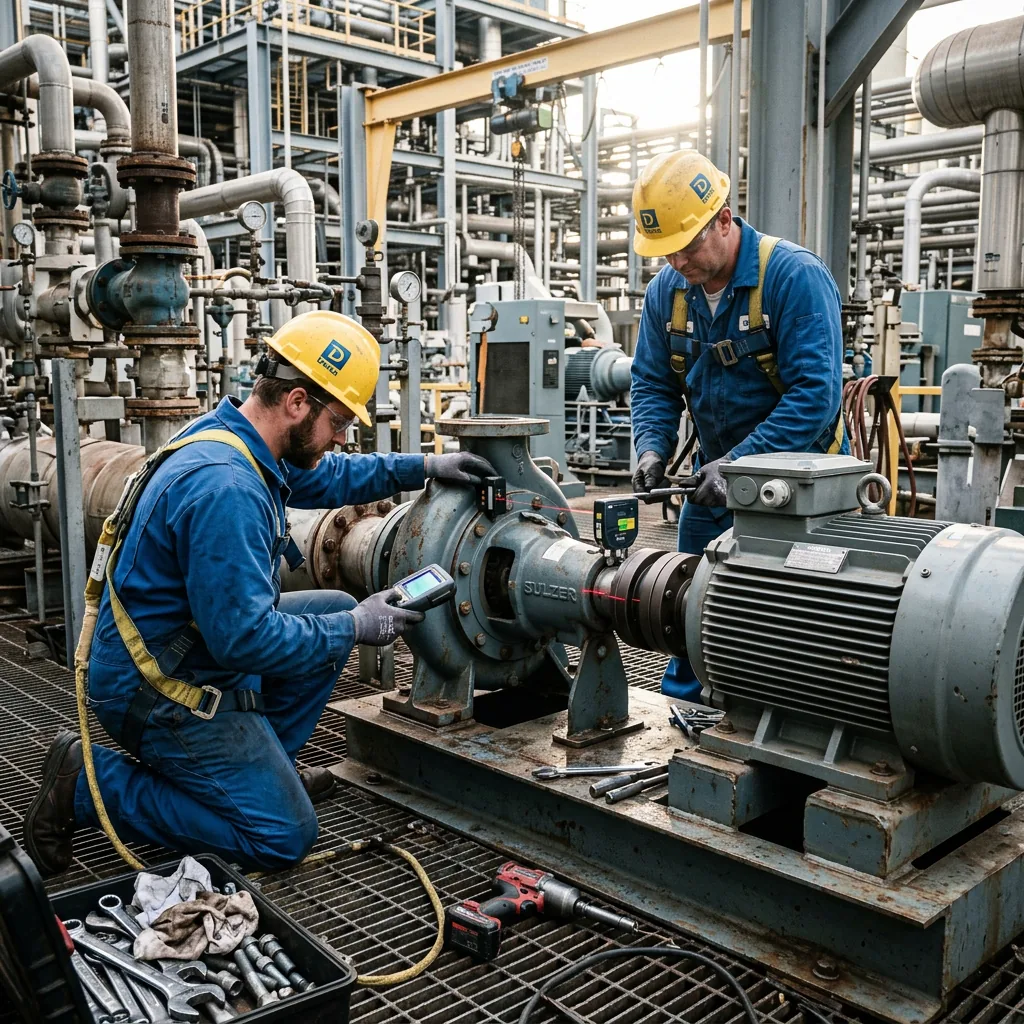
Precise laser alignment and vibration control in dynamic equipment such as pumps, compressors, and turbines.Steel Construction
Bolted connections made with torque values and certified welded joints for structural stability.Alignment
Micron-based balancing with laser devices to extend equipment life and prevent energy loss.Assembly Processes and Preparation
Before assembly, all technical documents (P&ID, Isometric drawings, Layout plans) must be examined in detail.
- Site Preparation: Ground leveling and crane operation plans.
- Material Control: Size verification and certificate checks completed before assembly starts.
- Connection Systems: Welding in accordance with WPS standards and fixing processes with correct torque values.
Why is Alignment Important?
Misalignment shortens equipment life, causes energy loss, and creates unwanted vibrations. Measurements made with laser alignment devices directly increase system efficiency.Quality Control and Occupational Safety
Mechanical assembly sites involve high risk. Therefore, safety and testing processes must be applied without compromise.
CRITICAL WARNING: Occupational Safety
Heavy lifting operations must be carried out with a crane operation plan and certified operators. In confined spaces, continuous gas measurement and ventilation are vital.Quality Tests:
- Visual Inspection: Physical accuracy of assembly.
- Pressure Tests: Leak verification in pipelines.
- NDT (Non-Destructive Testing): Inspection of welds using ultrasonic and radiographic methods.
Conclusion: Mechanical Assembly is a System Investment
Correct installation reduces the risk of failure, increases energy efficiency, and lowers maintenance costs. With modern technologies (BIM, Digital Twin), these processes can now be managed much more accurately.
Deta Mechanical Team
This content has been prepared and verified by Deta Industrial technical experts.