
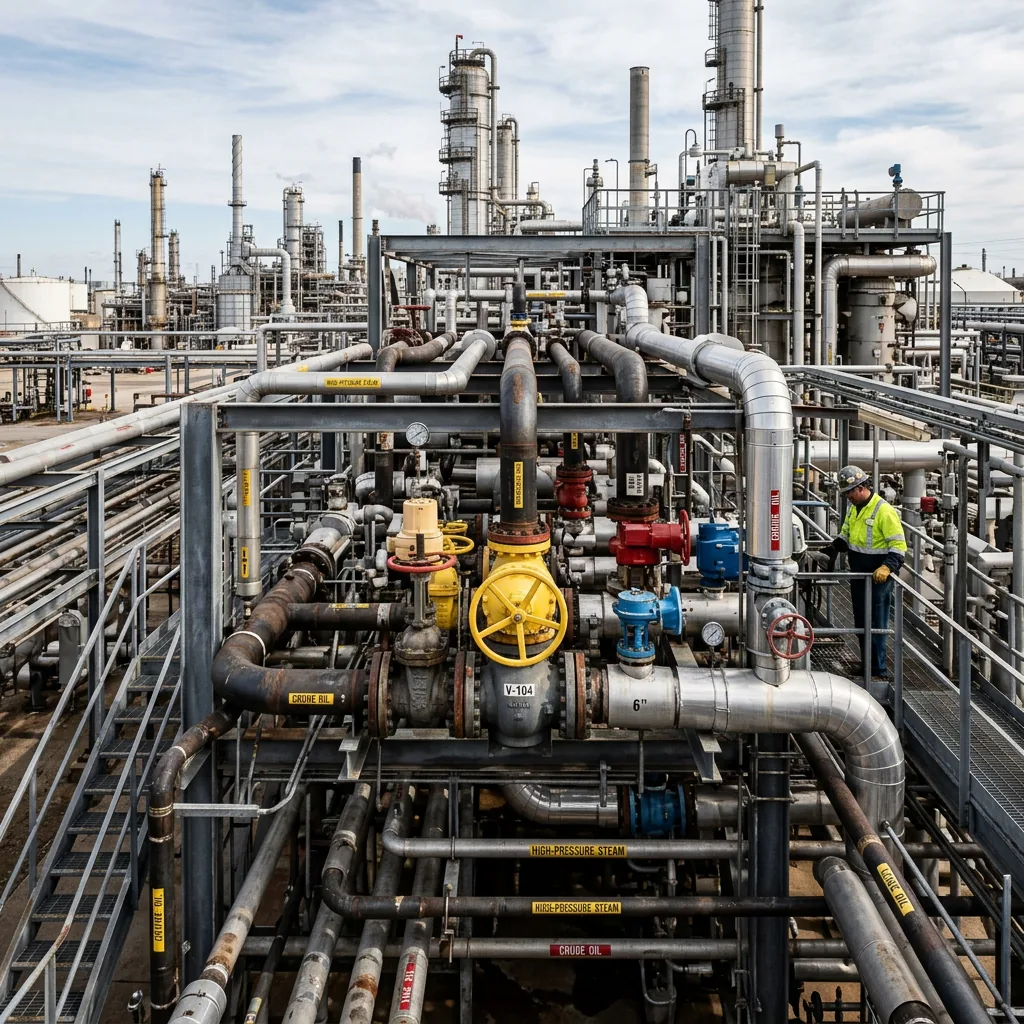
Industrial Piping Systems: Guide to Design, Assembly and Testing Processes
Introduction
At the heart of production processes in industrial facilities are industrial piping systems where fluids are transported safely and efficiently. In facilities such as refineries, petrochemicals, and power plants, these systems carry high-pressure gases, chemicals, and fluids at extreme temperatures. Even the smallest error in piping systems can lead to serious occupational safety risks and production losses.
What is Industrial Piping?
It is a system created by combining parts such as pipes, valves, flanges, and fittings (connection elements) which ensure the transportation of liquid and gas fluids within the facility according to engineering standards. It is considered the backbone of the facility.Design, Assembly and Engineering Criteria
Engineering design for a successful piping system is not just pulling lines but managing physical parameters such as pressure, temperature, and thermal expansion.
Materials Engineering
Corrosion resistance is provided with the selection of Carbon Steel, Stainless Steel, or special Alloy Steel according to the fluid's properties (abrasive, flammable, etc.).Prefabrication (Workshop)
Field speed and quality are maximized by performing pre-assembly (spool fabrication) of pipelines in a controlled workshop environment before going to the field.Welding and NDT Inspection
Sealing of each connection point is guaranteed with certified welding procedures (WPS) and Radiographic (RT) / Ultrasonic (UT) tests.Alignment and Expansion
Vibration-induced metal fatigue and failures are prevented with thermal expansion calculations (Expansion Loop) and precise alignment.Piping Tests and Commissioning
For the system to operate safely, strict testing protocols must be applied before commissioning.
- Hydrostatic Test: Sealing and strength verification by testing the system with water above the design pressure.
- Pneumatic Test: Precise pressure test performed with air or gas on lines where water use is risky.
- Insulation and Protection: Hot/cold insulation for energy efficiency and anti-corrosive coatings for external corrosion protection.
VITAL PRECAUTION: Torque and Alignment
Misalignment and incomplete torque application in flange connections cause sudden leaks and life safety risks in high-pressure lines. Tightening at standard values must be done with a torque wrench.Conclusion: Piping Systems are the Future of the Facility
Industrial piping systems reduce the risk of failure and extend the operational life of the facility with correct design and expert application. Full compliance with engineering standards is the key to sustainable success in EPC projects.
Deta Scaffolding Team
This content has been prepared and verified by Deta Industrial technical experts.