
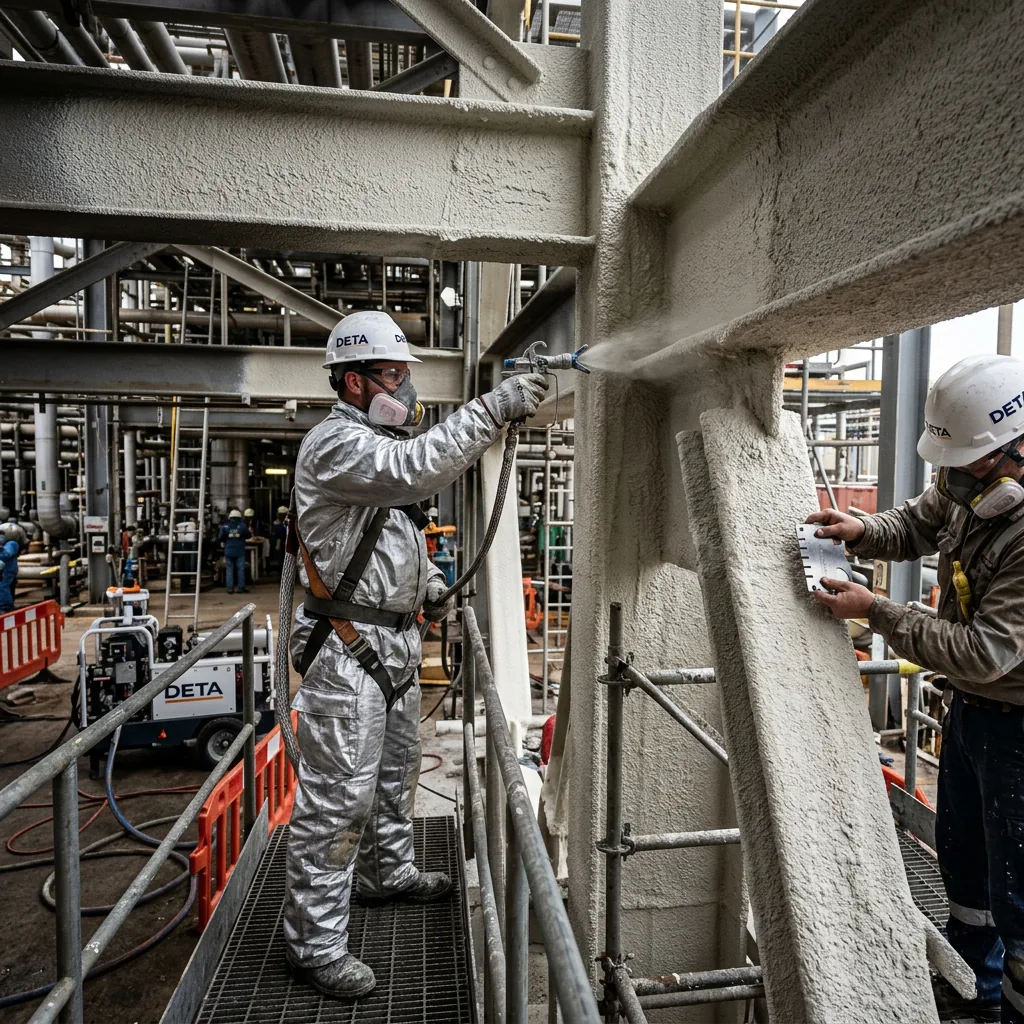
Passive Fire Protection Applications in Industrial Facilities: Guide to Critical Safety and Continuity
Introduction
Fire risk in industrial facilities is always a critical issue, especially in environments falling into high hazard classes such as refineries, petrochemicals, and power plants. A fire that may occur in these facilities can lead not only to equipment damage but also to loss of life and long-term production shutdowns.
In the modern industrial safety approach, Passive Fire Protection (PFP) systems play an indispensable role in managing these risks.
What is Passive Fire Protection (PFP)?
It is a protection method that limits the effects of fire until active systems (sprinklers, gas, etc.) intervene, protects the load-bearing capacity of structural elements, and gains vital time for evacuation.Application Areas and Material Types
PFP systems protect structural integrity in areas with high temperature and explosion risk such as refineries, offshore platforms, and power plants.
Intumescent Coatings
Reactive paints that expand with heat to form a protective carbon layer. Preferred in steel constructions with their aesthetic and light structure.Cementitious Systems
Highly durable and economical fire insulation solutions suitable for heavy-duty conditions and external environment requirements.Firestoppers
Meters that seal points such as cable crossings and pipe penetrations to prevent the spread of fire between sections.Mineral Wool Systems
Provides both heat and fire insulation in pipelines and HVAC systems thanks to their low thermal conductivity.Key to Success: Surface Preparation and DFT Control
In passive fire protection, application quality is critical for the system to provide protection in the specified periods (30, 60, 90, 120 min).
- Surface Preparation: Rust, oil, and dirt must be completely cleaned by sandblasting and a suitable primer must be applied.
- DFT (Dry Film Thickness): The fact that the coating is in the calculated micron values guarantees the certified protection period.
- Standard Compliance: Application must definitely depend on ISO, EN, and UL standards and certified application procedures.
CRITICAL NOTE: Fire Resistance Duration
Protection periods of 60-120 minutes determined according to project requirements represent the most critical process for preventing structural collapse and for the intervention of teams. Insufficient thickness directly reduces this duration.Conclusion: Passive Fire Protection is a Necessity
In industrial facilities, PFP is not a cost item but a vital investment that increases life safety, ensures operational continuity, and lowers insurance costs.
Deta Scaffolding Team
This content has been prepared and verified by Deta Industrial technical experts.