
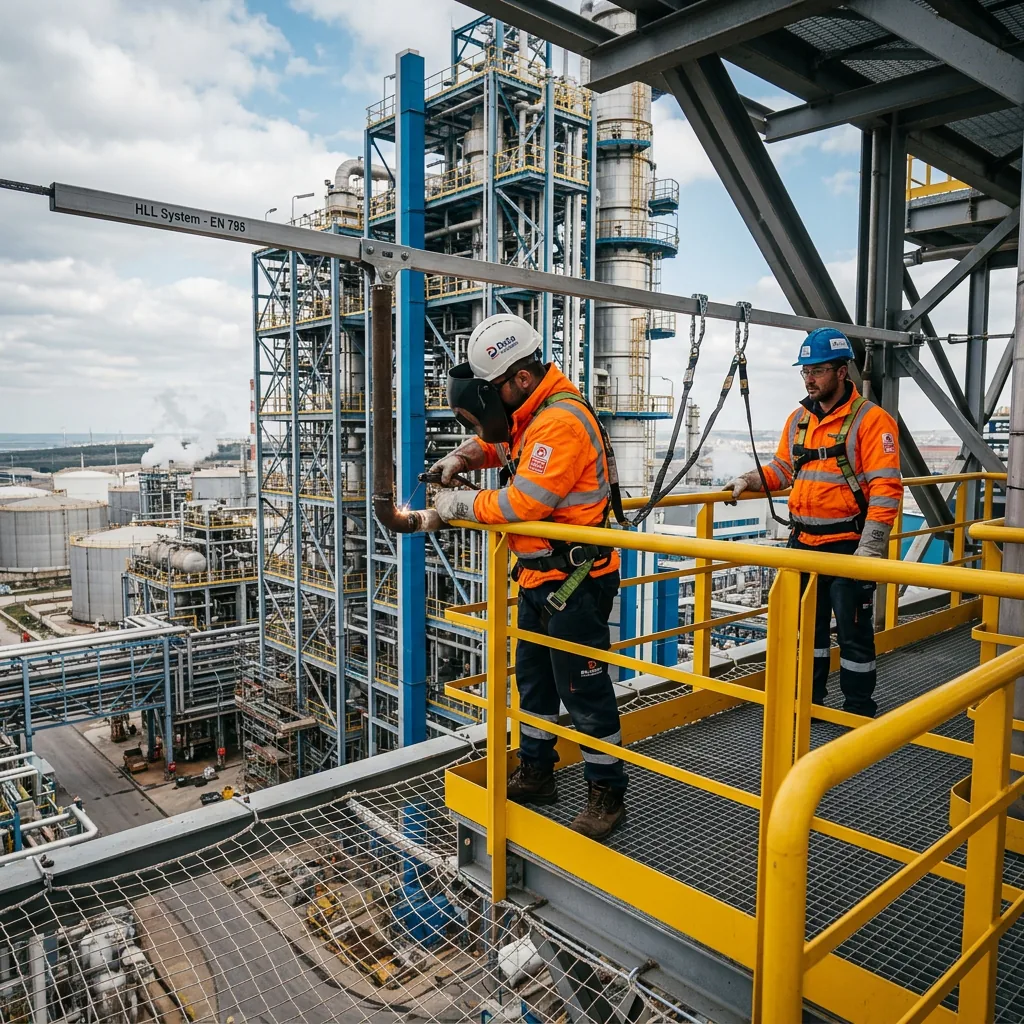
Work at Height HSE Guide: Strategies for Zero Fall Risk in Industrial Facilities
Introduction
Working at height is at the top of the areas where most fatal industrial accidents occur in industrial facilities. Scaffolding, platforms, tank tops, and steel constructions are high-risk working areas where maintenance, assembly, and insulation activities are concentrated. In refinery and energy projects, environmental hazards such as gas, pressure, and temperature come into play at the same time as height.
What is Work at Height?
According to the generally accepted definition, any level where there is a risk of injury as a result of a fall is considered "work at height". These risks must be managed not only with the use of equipment but also with a holistic system that requires planning, training, and site discipline.Fall Prevention Systems and Engineering Controls
The basis of working safely at height is to prioritize "Collective Protection" systems.
Collective Protection (Guardrails)
Surrounding the work area (guardrail, toe board) before individual equipment is the safest method that eliminates the fall risk at its source.Life Lines
Fixed or temporary horizontal/vertical life lines to which personnel are connected with a full-body safety harness in areas not protected by guardrails.Fall Arresters
Lanyards and shock absorbers prevent serious injuries by dampening the energy exerted on the body in the event of a possible fall.Scaffolding Safety
Fully platformed and inspected scaffolding compliant with standards (EN 12811) creates the most stable and safe areas of working to height.Planning and Risk Analysis
Risk Analysis (RA) and Method Statement (MS) special for that work must be prepared before each work at height activity.
- Ground and Environment Control: Stability of the ground on which the scaffolding or riser platform will sit and detection of surrounding energy lines.
- Weather Conditions Tracking: Working at height must absolutely be stopped in high wind speeds (>45 km/h) and excessive rainy weather.
- Rescue Plan: When a fall occurs, a professional rescue plan and equipment that can evacuate suspended personnel within 15 minutes must be available.
MISTAKE: Substandard Equipment
Worn lanyards or inappropriate anchorage points invite accidents by creating a "security illusion". Every piece of equipment must be inspected by the user before the shift and periodically by experts.Conclusion: Every Fall is a Preventable Accident
Working at height can lead to fatal results when not correctly managed. However, it is possible to reach the "Zero Accident" goal with professional training, certified equipment, and uncompromising site inspection.
Deta Scaffolding Team
This content has been prepared and verified by Deta Industrial technical experts.