
Industrial Tank Maintenance and Cleaning: Guide to Safe Storage and Maximum Efficiency
Introduction
Storage tank used in refinery, petrochemical, and energy facilities ensure the safe storage of raw materials and products. However, these tanks suffer from performance loss over time due to sediment accumulation and corrosion. Industrial tank maintenance and cleaning is a critical process for both operational efficiency and occupational safety that cannot be ignored.
Why is Tank Cleaning Performed?
Sludge and sediment accumulating at the bottom of the tank reduce capacity over time, impair product quality, and quickly cause corrosion on metal surfaces. Regular cleaning extends equipment life by eliminating these risks.Cleaning Methods and Modern Technologies
Different cleaning techniques are applied according to the size and content of the tanks with engineering discipline.
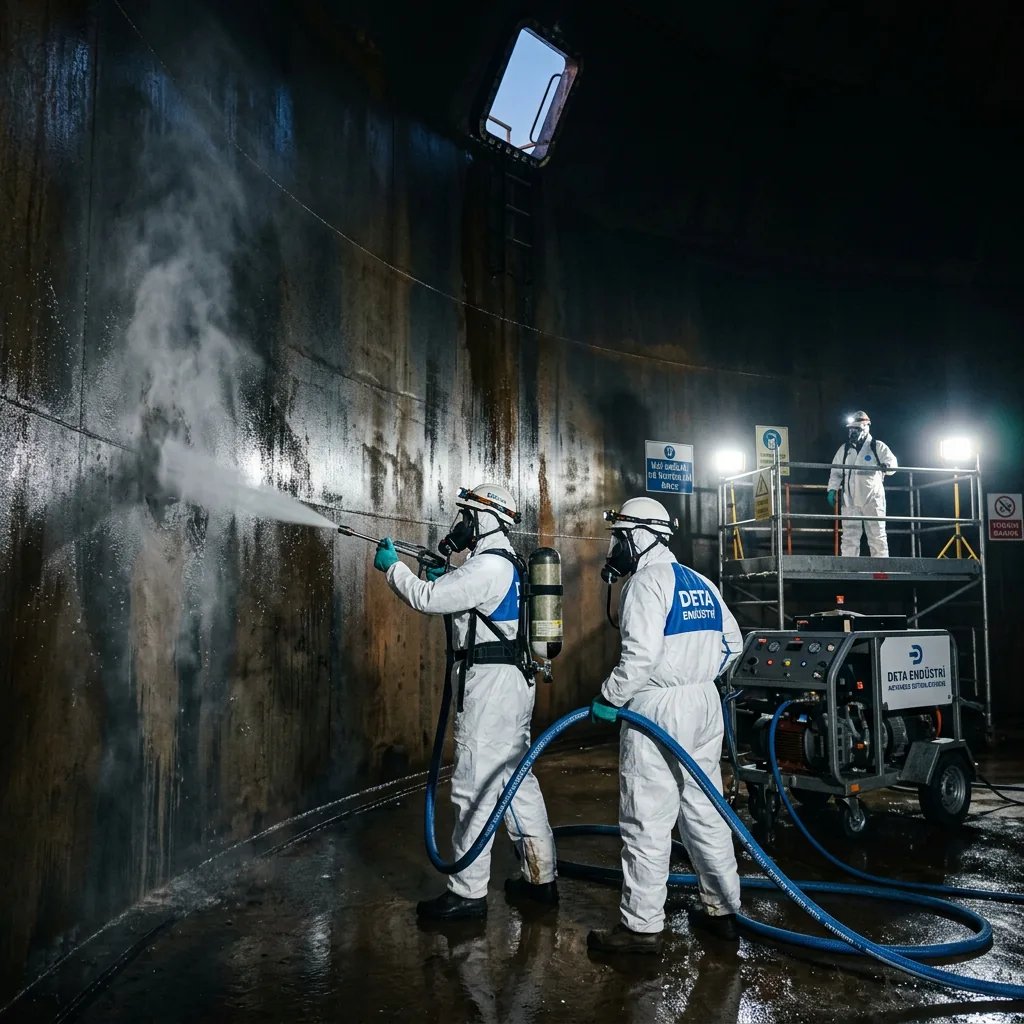
High Pressure Water (Hydro-Jetting)
Completely purifies hardened sediment and chemical residues on the surface with powerful water jets in an environmentally friendly approach.Robotic Cleaning Systems
Provides fast and safe cleaning opportunity with remote-controlled robots in areas where human entry is very risky.Chemical Cleaning
Precise cleaning in which certified chemical solvents compatible with the process are used to dissolve heavy oil and special sediments.Gas Measurement and Monitoring
Continuous monitoring of oxygen, flammable, and toxic gases against confined space risks is indispensable for the system.Confined Space Safety
Tank cleaning is one of the highest risk activities. Actions must be taken with the "Zero Accident" principle in these processes.
- Continuous Ventilation: Constant renewal of the air inside the tank with mechanical systems.
- Standby Man: Authorized safety personnel waiting outside and constantly monitoring the team inside.
- SCBA and Special PPE: Independent breathing apparatus and fully protective clothes against chemical exposure and oxygen deficiency.
Maintenance and Repair Phase
After cleaning, corrosion effect is determined by performing ultrasonic thickness measurement (UT) on the internal surfaces of the tank, and if necessary, the system is renewed with anti-corrosive coating/paint revision.Conclusion: Tank Maintenance is the Basis of Safe Production
A correctly planned tank maintenance process protects your business from unplanned shutdowns and product contamination. Professional tank cleaning is not a cost but a mandatory investment for facility safety.
Deta Scaffolding Team
This content has been prepared and verified by Deta Industrial technical experts.