
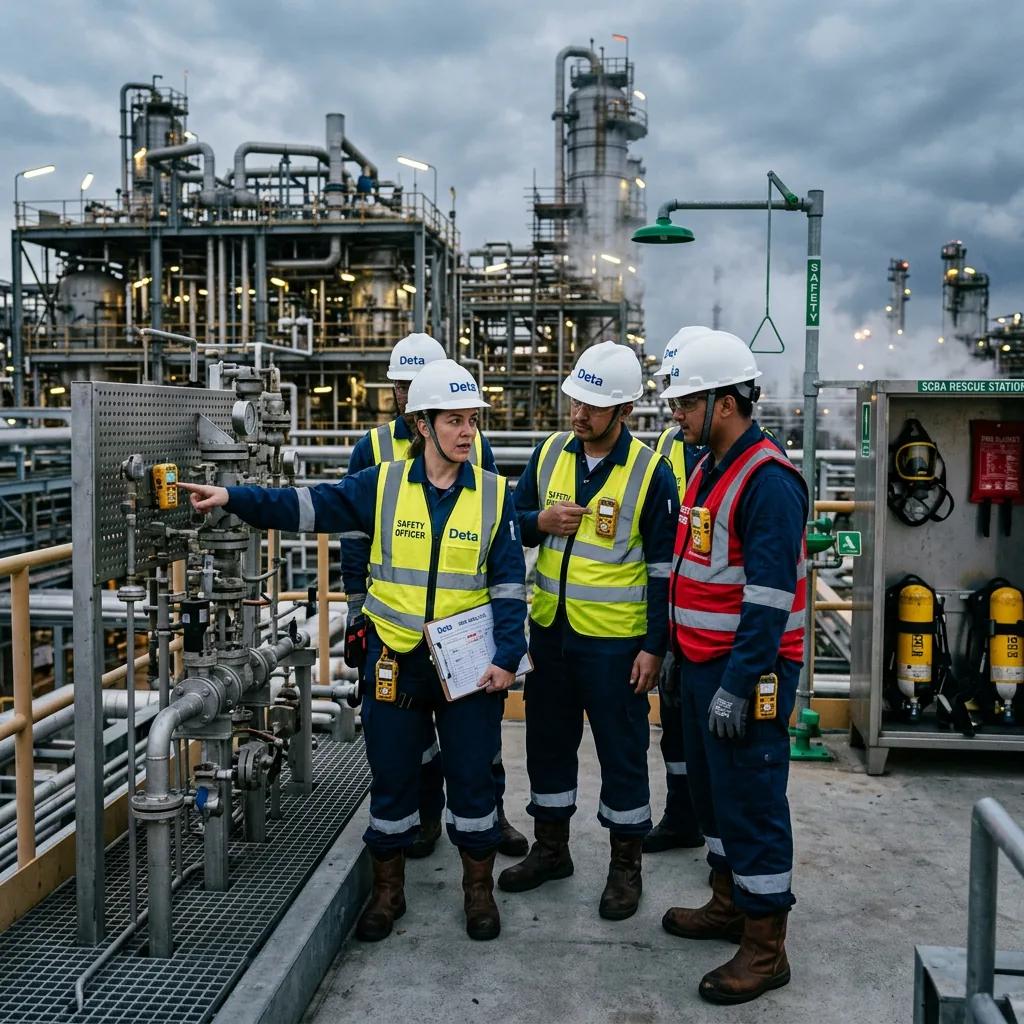
Occupational Safety in Industrial Facilities: Guide to Risk Management and Critical Hazards in EPC Projects
Introduction
Occupational safety in industrial facilities is not only a legal obligation; it is also a critical management discipline in terms of operational continuity, human life, and brand reputation. In high-risk environments such as refineries, petrochemical plants, and power plants, even a small neglect can lead to serious accidents and irreversible consequences.
Occupational safety in EPC (Engineering, Procurement, Construction) projects must be executed in an integrated manner with all disciplines from the planning stage to the commissioning process.
What is Industrial Occupational Safety?
It is a set of systematic practices that ensure the protection of employees against physical, chemical, and environmental risks. High-risk working environments, heavy equipment use, and toxic gases make this discipline the top priority of facilities.Main Risk Groups and Hazards
Risks in industrial sites vary, and each requires specific prevention strategies.
Chemical Risks
Use of advanced respiratory equipment against toxic gases (H2S, CO), acid exposure, and solvent effects.Physical Risks
Continuous monitoring of factors such as falling from height, being trapped under heavy loads, noise, and vibration.Thermal Risks
Heat-resistant PPE and barrier systems against high temperatures, steam lines, and fire risks.Mechanical Risks
Protective guards against rotating equipment, crushing, and cutting, and LOTO (Lock Out Tag Out) systems.The Invisible Danger in Refineries: H2S (Hydrogen Sulfide)
One of the most dangerous gases in refineries and petrochemical plants is hydrogen sulfide (H2S) gas. Although colorless and smelling like rotten eggs, it instantly disables the sense of smell at high concentrations.
VITAL WARNING: Do Not Trust Your Sense of Smell!
H2S gas paralyzes the sense of smell at high levels. Therefore, saying "I don't smell gas" can be a fatal mistake. Every employee must carry a calibrated portable gas detector.Confined Space and Working at Height
Two of the highest risk areas in industrial facilities are confined space and working at height.
- Confined Space: Must be carried out with gas measurement (before and during), ventilation, and a "standby man" (watchman personnel).
- Working at Height: The use of life lines, full body type safety harnesses, and secure scaffolding systems must be implemented without compromise.
PTW (Permit to Work) System
Uncontrolled work is unacceptable in EPC projects. All risks in the field are managed with the approval of authorized personnel through hot work permits, confined space permits, and working at height permits.Quality Safety Culture
Occupational safety is not just equipment; it is a management culture. Senior management support, continuous training, and open communication form the basis of this culture. Modern technologies (IoT-based sensors, digital permit systems) make this process error-free.
Conclusion: Occupational Safety is an Investment, Not a Cost
Correctly applied occupational safety systems minimize industrial accidents, ensure project continuity, and most importantly, protect human life.
Deta Scaffolding Team
This content has been prepared and verified by Deta Industrial technical experts.