
Industrial Insulation Applications: Guide to Energy Efficiency, Safety and Performance in EPC Projects
Introduction
One of the most critical elements when it comes to energy efficiency, process safety, and operational sustainability in EPC (Engineering, Procurement, Construction) projects is industrial insulation applications. Insulation systems used in refineries, petrochemical plants, power plants, and heavy industrial facilities not only prevent heat loss but also ensure personnel safety and extend equipment life.
An incorrectly designed or improperly applied insulation system can lead to energy losses, condensation problems, corrosion, and significant cost increases. Therefore, insulation must be handled in an integrated manner with engineering calculations and field applications.
What is Industrial Insulation?
Industrial insulation is the process of covering equipment, pipelines, and structures with suitable materials to control physical effects such as heat, sound, and fire. Unlike other types of insulation, it withstands high temperatures and provides protection against corrosion.Insulation Types and Material Selection
Insulation systems vary according to their intended use. Correct material selection directly affects the performance of the system.
Thermal Insulation
Applied using rock wool, glass wool, and ceramic fiber to reduce heat loss and increase energy efficiency.Cold Insulation
Materials with low conductivity such as polyurethane foam are used to prevent condensation in LNG facilities and cooling lines.Fire Insulation
Increases structural safety and protects critical equipment with special fire-resistant materials.Sound Insulation
Applied for personnel health and environmental noise control in high-noise areas such as turbines and compressor rooms.Critical Risk: Corrosion Under Insulation (CUI)
One of the greatest risks in insulation applications is CUI (Corrosion Under Insulation).
- Surface Preparation: Before insulation, the surface must be completely cleared of oil, rust, and dirt.
- Anti-Corrosive Protection: High-performance protective paint systems must be applied under the insulation.
- Sealing: Water tightness of the external cladding is vital to minimize corrosion risk.
Cladding Application
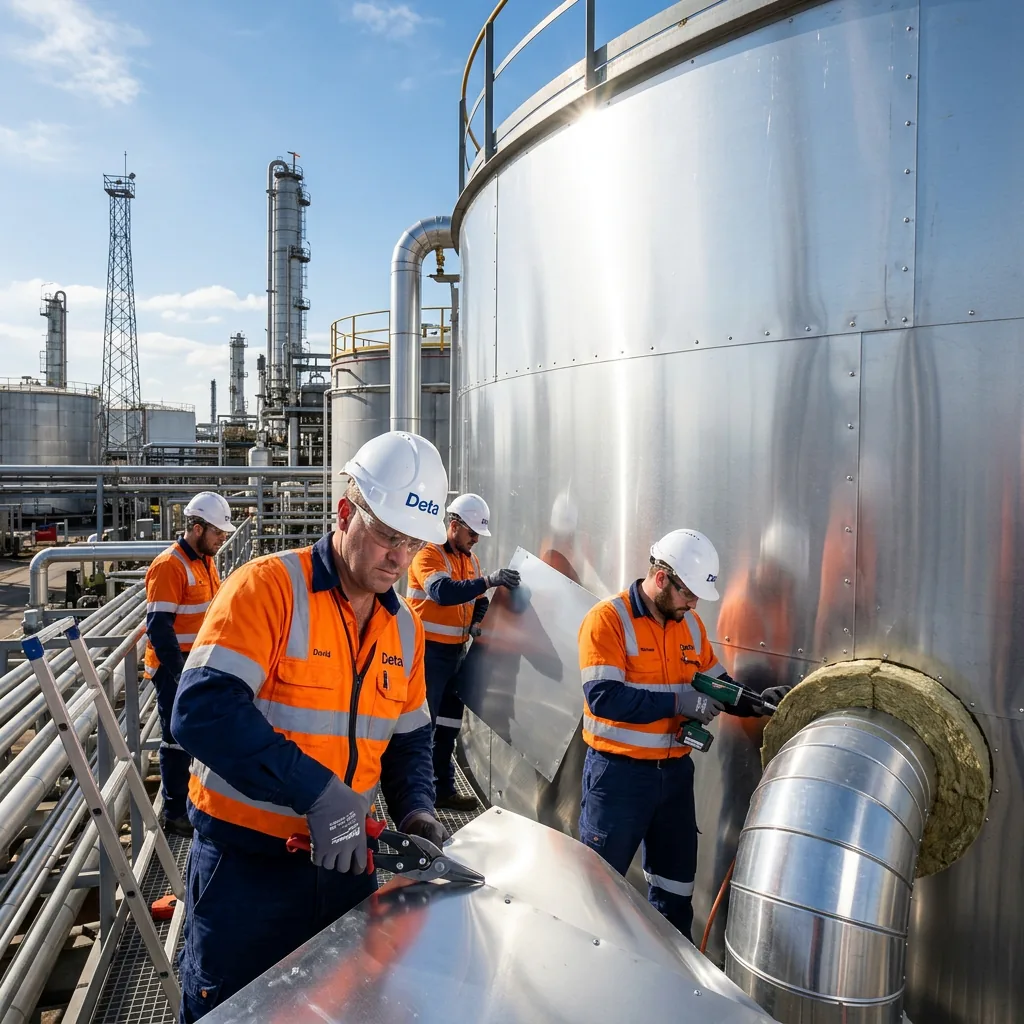
The insulation material must be covered with metal jackets such as aluminum or stainless steel. This cladding protects the insulation from mechanical damage and weather conditions.Quality Control and Modern Technologies
For successful insulation, post-application tests should be performed regularly.
CRITICAL NOTE: Thermal Camera Analysis
Unlike traditional methods, heat leaks and insulation errors in the system can be detected instantly with thermal camera analysis, optimizing energy efficiency.Common Mistakes:
- Insufficient Surface Preparation: The main reason for shortening the life of the system.
- Lack of Vapor Barrier: Leads to condensation and icing in cold insulation.
- Incorrect Material Selection: Material that is not suitable for environmental conditions reduces performance.
Conclusion: Insulation is an Energy Investment, Not an Expense
Industrial insulation is one of the invisible but most critical performance elements of facilities. When applied correctly, it lowers energy costs, increases operational safety, and reduces the carbon footprint.
Deta Insulation Team
This content has been prepared and verified by Deta Industrial technical experts.