
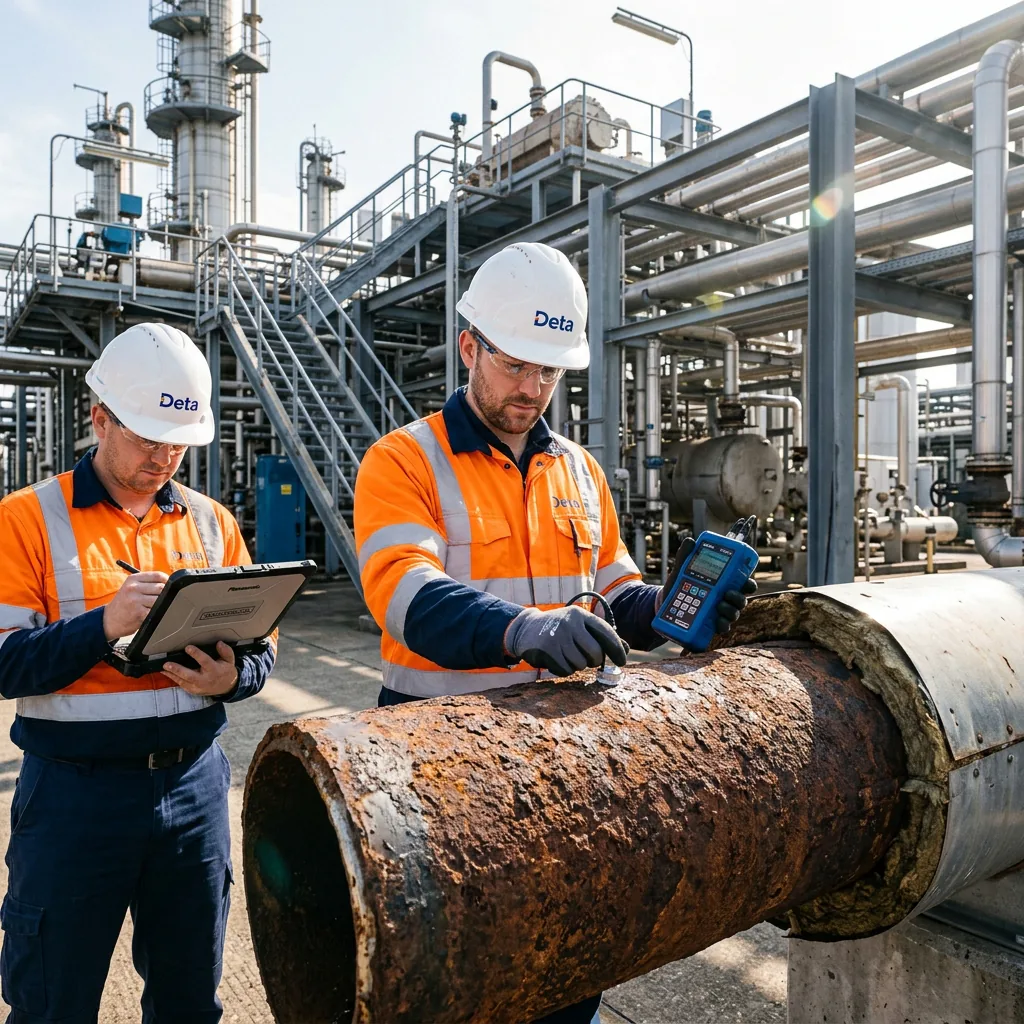
CUI (Corrosion Under Insulation): Guide to Preventing Corrosion Under Insulation
Introduction
In industrial facilities, pipelines, tanks, and equipment are covered with insulation to prevent heat loss. However, when these systems are not correctly managed, they bring along a silent danger: CUI (Corrosion Under Insulation).
CUI is a critical problem that is difficult to notice from the outside but can lead to major damage, leaks, and even catastrophic accidents in the long run. This risk, which is one of the biggest items in maintenance costs, must be addressed directly with engineering discipline.
What is CUI?
It is the corrosion of metal surfaces under the insulation coating due to the effects of moisture, oxygen, and temperature. It is called a "silent danger" because it is difficult to see with the naked eye.Why Does CUI Occur? Critical Factors
For CUI to occur, moisture, oxygen, and a suitable temperature range (50°C - 175°C) must come together. This range allows water to remain on the surface without evaporating and to continue the reaction.
Water and Moisture Entry
Rain, condensation, or process leaks leaking into the insulation material and reaching the metal surface trigger corrosion.Incorrect Insulation
Selection of water-holding (hydrophilic) materials and incorrect sealing details cause moisture to trapped on the surface.Temperature Ranges
Condensation risk increases particularly on lines operating at fluctuating temperatures, and the corrosion process accelerates.Lack of Surface Protection
Inadequacy of the anti-corrosive coating (paint) applied under the insulation leads to the metal remaining defenseless.Prevention and Detection Methods
Although complete removal of the insulation is the most certain method for CUI detection, this process can be managed more optimized with modern technologies.
- Correct Coating Selection: Applying high-temperature resistant epoxy or silicone-based coatings under the insulation is the most important line of defense.
- Hydrophobic Insulation: Selection of insulation materials with water repellent properties should prevent moisture from being trapped in the structure.
- Non-Destructive Testing (NDT): Scanning can be done without removing the insulation with methods such as thermography, ultrasonic wall thickness measurement, and radiography.
CRITICAL WARNING: Water Drainage
Water drainage paths and vapor barriers must definitely be designed in insulation cladding. Even a small error in sealing increases the corrosion risk of the entire system.Conclusion: CUI Management is a Strategy
CUI is not just a maintenance problem; it is a strategic risk threatening operational safety. This risk can be completely controlled with correct material selection, professional application, and Risk Based Inspection (RBI) approaches.
Deta Insulation Team
This content has been prepared and verified by Deta Industrial technical experts.