
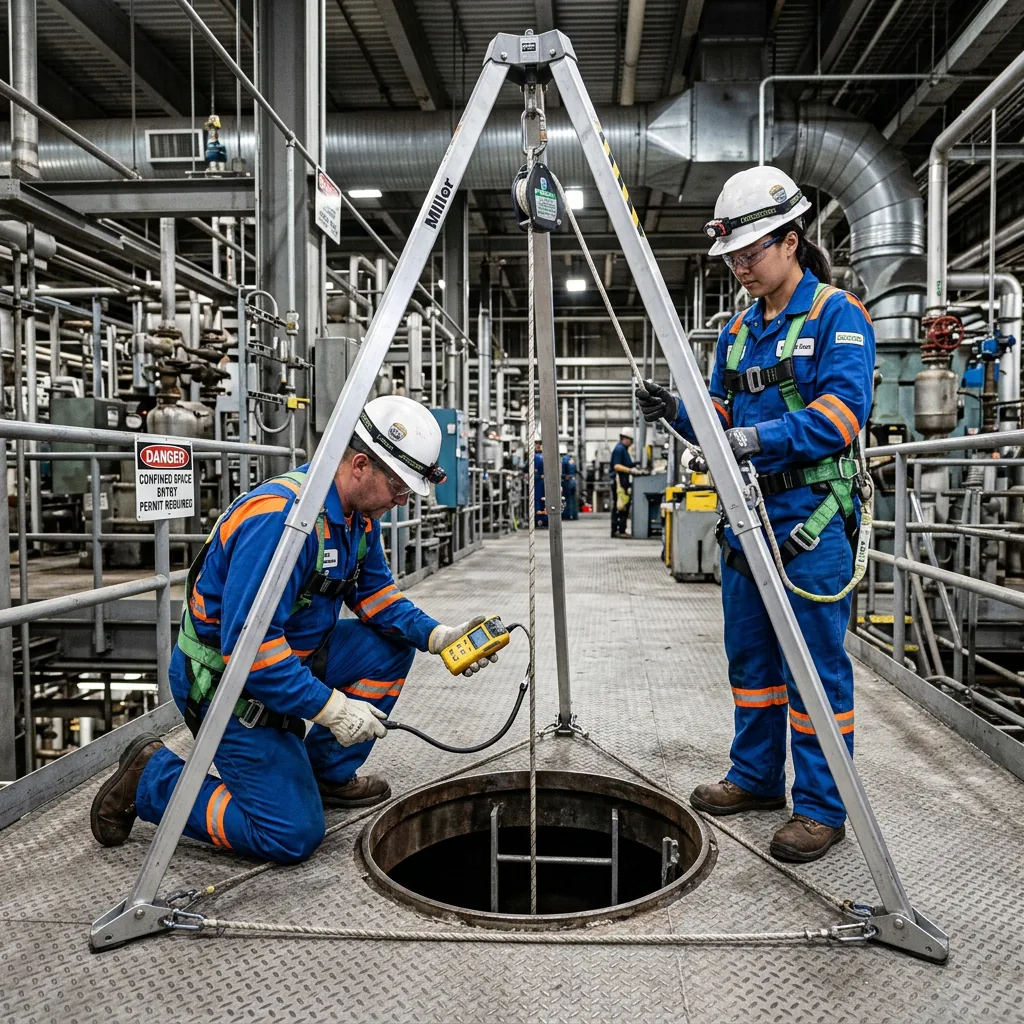
Occupational Health and Safety in Confined Space Works: Critical Guide for Industrial Facilities
Introduction
One of the highest risk working environments in industrial facilities is confined spaces. Areas with limited entry and exit such as tanks, silos, reactors, and underground lines contain invisible but fatal risks. Occupational Health and Safety (HSE) in confined spaces is of vital importance in maintenance activities carried out in refinery and petrochemical facilities. Even the smallest error in these areas can lead to serious accidents such as suffocation, poisoning, or explosion.
What is a Confined Space?
They are areas that are not suitable for continuous work, have limited entry and exit, and have the possibility of a hazardous atmosphere (gas accumulation or oxygen deficiency) forming. Tanks, silos, and sewer lines fall into this category.Critical Risks in Confined Spaces
Most of the risks encountered in these areas cannot be perceived by the senses, therefore the use of technical equipment is mandatory.
Oxygen Deficiency
The most common cause of death. While the oxygen level falling below 19.5% creates a vital risk, this situation usually gives no smell or sign.Toxic and Flammable Gases
Toxic gases such as H₂S (Hydrogen Sulfide) and CO (Carbon Monoxide) as well as explosive hydrocarbon vapors must be monitored continuously.Physical Hazards
Narrow space, slip-fall risk, and unexpected movement of equipment (LOTO requirement) are the biggest physical risks in the confined space.Rescue Difficulty
Intervention at the time of an accident is very difficult due to limited access; therefore, a "Standby Man" and a rescue plan are mandatory.Safe Working Procedures
Occupational safety in confined spaces is provided with a disciplined "Permit System" and continuous monitoring.
- Continuous Gas Measurement: Gas measurement must continue uninterruptedly throughout the work, not just before the work starts inside.
- Mechanical Ventilation: Pressurized ventilation systems should be used for continuous cleaning of the air inside and removal of hazardous vapors.
- Standby Man: Authorized personnel waiting just outside the tank, in constant communication with the personnel inside, and informing the rescue team in case of emergency.
VITAL WARNING: Do Not Enter Uncontrolledly
Entering a confined space where gas measurement has not been performed and a permit to work (PTW) has not been obtained is equivalent to suicide. 60% of deaths in confined space accidents are caused by untrained personnel trying to rescue their friends inside.Conclusion: Confined Space Safety Saves Lives
With correct planning, certified equipment, and continuous inspection, confined space risks can be completely managed. If you target Zero Accident in your facility, it is essential to structure your confined space procedures according to professional standards.
Deta Scaffolding Team
This content has been prepared and verified by Deta Industrial technical experts.